
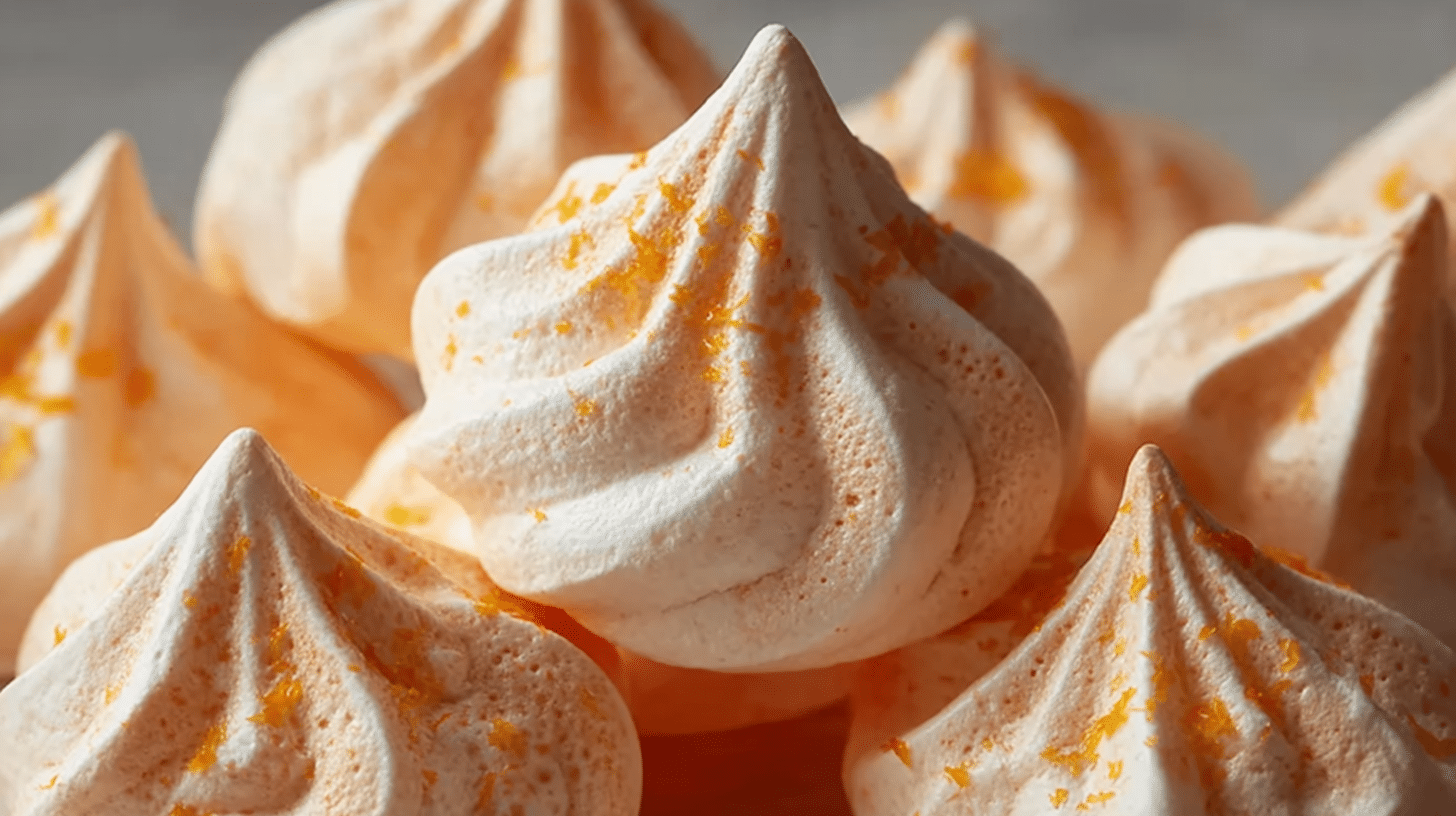
Crispy, feather-light, and bursting with citrus aroma, Orange Meringue Cookies are a delightful confection that feels like sunshine in every bite. This recipe transforms simple pantry staples into irresistible treats that balance sweetness with zesty flavor. What makes Orange Meringue Cookies truly special is how the orange zest perfumes the airy meringue without weighing it down. In this guide, you’ll learn what sets them apart, what ingredients you need, how to bake them perfectly, and how to store or customize them. You’ll learn how to master this elegant cookie like a pro.
Why You’ll Love This Recipe
There are so many reasons to fall for Orange Meringue Cookies. First, the flavor is unexpected yet familiar: the brightness of orange zest elevates the classic vanilla meringue, giving it a refreshing twist that pairs well with afternoon tea or holiday platters. Second, the contrasting textures make them addictive — the crisp outer shell gives way to a slightly soft interior that melts away on the tongue. You get lightness, crunch, and creaminess all in one bite.
Another reason is their simplicity. You only need a handful of ingredients and a mixer, with no complicated shaping or chilling steps. They bake low and slow, allowing the citrus essence to bloom without burning the delicate meringue. These cookies are also naturally gluten-free, making them a perfect crowd-pleasing dessert. For anyone who loves bright and fragrant flavors, or who enjoys baking sweets that look and taste elegant without being difficult, this recipe checks every box. With bold color, subtle shine, and an uplifting aroma, they feel like springtime no matter when you bake them.
Ingredients
To make a batch of irresistible Orange Meringue Cookies, you’ll need:
4 large egg whites (120g), at room temperature for best volume
1 cup (200g) granulated sugar, superfine preferred for easier dissolving
1 teaspoon (4g) cornstarch, for extra stability
1 teaspoon (5ml) white vinegar or lemon juice, which helps the meringue structure
1 tablespoon (6g) finely grated orange zest, from a fresh navel or Cara Cara orange
1 teaspoon (5ml) vanilla extract, adds deeper flavor and rounds out the citrus
Pinch of salt, enhances sweetness and balances flavor
Optional: 1–2 drops orange extract for a stronger citrus profile
The egg whites form the airy base, the sugar creates shine and crispness, and the vinegar plus cornstarch ensure the cookies bake up beautifully without collapsing. Fresh zest provides fragrance and flavor, so choose juicy, fragrant oranges.
Pro Tips
Baking the perfect Orange Meringue Cookies comes down to technique, and these tips make all the difference:
Start with clean, grease-free equipment. Any fat prevents egg whites from whipping properly. Use a clean glass or metal bowl and wipe the mixing bowl with a little vinegar if you’re unsure. This ensures you get stiff, glossy peaks every time. If you’ve ever made airy desserts like strawberry pavlova or garlic pasta with lemon zest as a savory example, you know that clean prep always matters.
Add sugar gradually for the best structure. Dumping sugar in at once deflates the whites and leads to grainy texture. Add one tablespoon at a time while mixing. This creates a smooth, glossy finish and prevents seeping or cracking in the oven. You want volume and stability together, especially for cookies that need to hold their shape.
Bake low and cool completely before handling. The secret to crisp yet delicate cookies is low heat and patience. These cookies bake at 225°F (110°C) and cool inside the oven afterward. Never rush this stage — removing them early causes cracks or stickiness. Once cool, they release easily and keep their perfect texture.
Instructions
(Step 1) Preheat your oven to 225°F (110°C). Line two baking sheets with parchment paper. Set them aside. Separate the egg whites carefully, making sure no yolk enters the bowl. Even a tiny amount of fat prevents proper whipping. Let the whites sit for 10–15 minutes to reach room temperature, which helps them whip faster and higher.
(Step 2) Using a stand mixer or a hand mixer fitted with a clean whisk attachment, begin whipping the egg whites on medium speed until they turn frothy. Add a pinch of salt. Increase the speed to medium-high and continue whisking until soft peaks form. Soft peaks look billowy and fold over when you lift the whisk.
(Step 3) With the mixer running, add the granulated sugar one tablespoon at a time. This takes a couple of minutes. Resist the urge to rush here. As you add sugar slowly, the mixture becomes glossy and thicker. Once all sugar is in, continue whipping until stiff, shiny peaks stand straight when you lift the whisk. Rub a bit of meringue between your fingers: if it feels grainy, whip a bit longer so the sugar fully dissolves.
(Step 4) Add the cornstarch, vinegar (or lemon juice), vanilla extract, and orange zest. Mix briefly just until incorporated. Avoid overmixing, since you want the stiff structure to stay intact. The zest should distribute evenly, creating tiny flecks throughout the meringue.
(Step 5) Spoon or pipe tablespoon-sized dollops onto the prepared baking sheets, spacing them about an inch apart. Piping creates uniform, elegant cookies, but spooning gives a charming rustic look. If you choose piping, use a star or round tip for attractive texture.
(Step 6) Place the trays in the oven and bake for 75–90 minutes, or until the cookies feel dry on the surface and lift easily without sticking. They should remain pale and light. If your oven runs hot, crack the door slightly with a wooden spoon after the first 30 minutes. If you’ve ever baked crunchy snacks like parmesan crisps or even garlic pasta with bacon where timing affects texture, you’ll appreciate the precision here too.
(Step 7) Turn off the oven and leave the cookies inside until completely cool, about one hour. This slow cooling prevents cracks and gives the cookies their final crispness. Once cool, transfer them to an airtight container or plate for serving.
This entire process feels hands-on and satisfying, and the smell of fresh citrus drifting from the oven will make waiting easier.
Variations
While Orange Meringue Cookies are delicious as written, there are fun ways to adapt them:
Chocolate Drizzle: Melt ½ cup (85g) chocolate chips and drizzle over cooled cookies for a sweet contrast. Dark chocolate tastes especially good with orange.
Blood Orange or Lemon Twist: Swap regular orange zest for blood orange or lemon zest for a colorful or tangier flavor profile. Lemon gives extra brightness, while blood orange adds berry-like aroma.
Dairy-Free Sandwiches: Spread dairy-free chocolate ganache or whipped coconut cream between two cookies for a more decadent treat. This transforms them into citrusy sandwich cookies without losing the airy texture.
Storage and Serving
These cookies store beautifully thanks to their low moisture. Place Orange Meringue Cookies in an airtight container at room temperature for up to five days. Add a sheet of parchment between layers to prevent breakage. Avoid humidity, which softens the shells and reduces crispness.
For serving ideas, pair them with hot tea or espresso for a European-style dessert. They also shine on holiday cookie trays because their pale color and flecks of zest look elegant next to darker baked goods. Another fantastic option is plating them beside cups of orange sorbet or vanilla ice cream, allowing the cold creaminess to contrast with the crisp cookies. Their portability makes them ideal for picnics, bake sales, or casual gatherings.
FAQs
How many cookies does this recipe make?
You’ll get about 30 medium cookies, depending on how large you pipe or spoon them.
Can I use bottled orange juice instead of zest?
Juice adds moisture but little aroma. Zest contains oils that deliver flavor. Stick with fresh zest for the best result.
Why did my cookies turn sticky?
Humidity causes stickiness. Store your cookies in a dry environment and avoid refrigerating, since moisture softens the meringue.
Can I freeze these cookies?
Freezing isn’t ideal because thawing introduces moisture. For long-term storage, keep them airtight in a cool pantry.
Can I use a substitute for vinegar?
Yes, lemon juice works perfectly. Both help stabilize the meringue and prevent collapse.
This Orange Meringue Cookies is comfort food at its finest light, fragrant, and beautifully crisp with a burst of citrus. It’s the kind of dish that brightens gatherings, adds elegance to dessert tables, and makes everyday snacking feel special.