
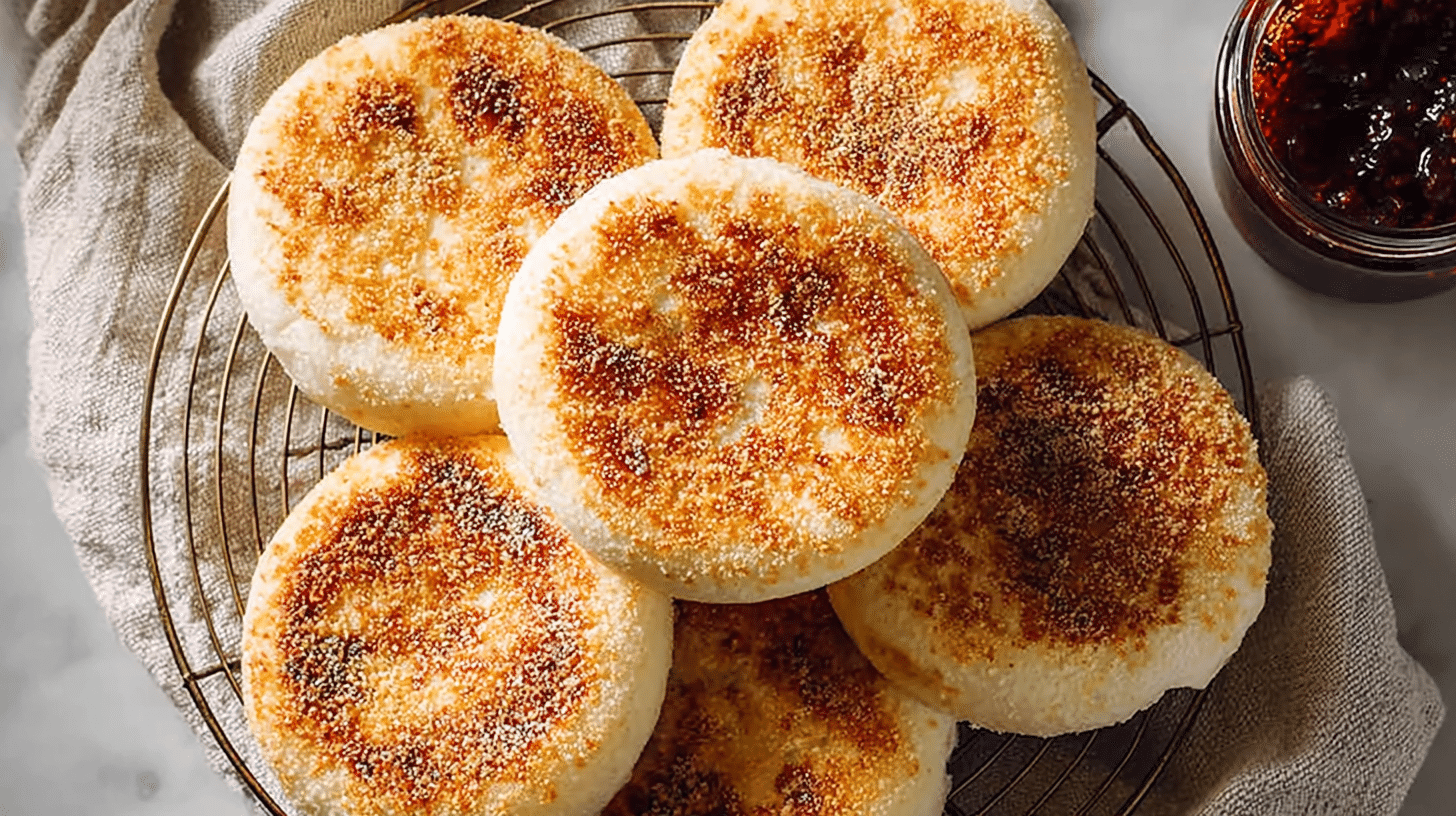
Warm, golden, and irresistibly soft on the inside with a delicate crisp on the outside, Buttery English Muffins are the perfect breakfast treat. These muffins feature a rich buttery flavor that complements their tender, chewy texture, making them ideal for morning toasts or decadent sandwiches. Unlike store-bought versions, homemade muffins give you full control over flavor, texture, and size. The buttery richness melts into every nook and cranny, creating a sensational bite. You’ll learn how to make these classic breakfast staples from scratch, achieve that signature nooks-and-crannies texture, and enjoy a buttery, satisfying start to your day.
Why You’ll Love This Recipe
Buttery English Muffins are a favorite for several reasons. First, the texture is unparalleled. The soft, airy interior paired with a slightly crisp exterior gives you a perfect contrast in every bite. Each muffin develops signature nooks and crannies, ideal for holding melted butter, jam, or honey.
Second, the flavor is rich yet balanced. The butter not only enhances taste but also tenderizes the dough, giving it a melt-in-your-mouth quality that elevates a simple breakfast. Unlike store-bought muffins, these are free of preservatives and artificial flavors, making them wholesome and fresh.
Ease of preparation is another major plus. With a straightforward dough and a quick stovetop or oven finish, you can have bakery-quality muffins at home without complicated techniques. They also double as versatile components for sandwiches, eggs Benedict, or even mini pizzas, offering both flavor and flexibility in your meals.
Finally, this recipe allows for customization. You can sprinkle sesame or poppy seeds on top, add a hint of cinnamon, or make them whole wheat for a healthier twist, ensuring that every batch suits your taste and dietary preferences.
Ingredients
To make approximately 8 Buttery English Muffins, you will need:
1 cup warm milk (240 ml), about 110°F/43°C
2 tablespoons granulated sugar (25 g)
2 ¼ teaspoons active dry yeast (1 packet / 7 g)
3 tablespoons unsalted butter, melted (42 g)
1 teaspoon salt (5 g)
2 cups all-purpose flour (250 g), plus extra for rolling
Cornmeal for dusting the baking surface
Optional for variations:
½ teaspoon cinnamon for a sweet twist
¼ cup whole wheat flour (30 g) to replace part of the all-purpose flour
The yeast gives these muffins a light, airy texture, while the butter ensures rich flavor. Cornmeal prevents sticking and contributes to that classic crunchy base.
Pro Tips
1. Use warm milk, not hot
The milk should feel warm to the touch, around 110°F (43°C). Too hot, and it can kill the yeast, preventing proper rising.
2. Do not over-flour
While adding extra flour can prevent sticking, too much flour will make the muffins dense rather than soft and airy.
3. Allow proper proofing
Let the dough rise in a warm environment until it doubles in size. This step is crucial for achieving light, fluffy interiors.
Additionally, gently roll the dough rather than pressing too hard to maintain air pockets. Using cornmeal generously on the baking surface gives that authentic muffin base with slight crunch. Cooking over medium-low heat ensures the exterior browns without burning while keeping the interior tender.
Instructions
Step 1 Mix the yeast
In a small bowl, combine warm milk and sugar. Stir in yeast and let it sit for 5–10 minutes until foamy.
Step 2 Prepare the dough
In a large mixing bowl, combine melted butter, salt, and 1 cup flour. Mix well, then add the yeast mixture gradually. Stir in the remaining flour until a soft, slightly sticky dough forms.
Step 3 Knead the dough
Lightly flour a surface and knead the dough for 6–8 minutes until smooth and elastic. This develops the gluten for a perfect chewy texture.
Step 4 First rise
Place the dough in a greased bowl, cover with a towel or plastic wrap, and let it rise in a warm spot for 1–1.5 hours until doubled.
Step 5 Shape the muffins
Punch down the dough, roll it to about ½-inch thickness, and use a round cutter to shape muffins. Place them on a baking sheet dusted with cornmeal. Sprinkle more cornmeal on top to prevent sticking.
Step 6 Second rise
Cover muffins loosely with a towel and let them rise for another 20–30 minutes.
Step 7 Cook the muffins
Preheat a nonstick skillet or griddle over medium-low heat. Cook muffins for 7–10 minutes per side until golden brown.
Step 8 Cool and serve
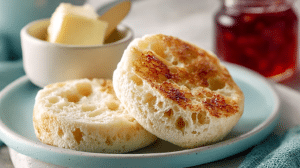
Transfer muffins to a wire rack to cool slightly. Slice horizontally with a fork to reveal nooks and crannies. Spread with butter, jam, or honey and enjoy.
Variations
Whole wheat muffins: Replace ¼ cup of all-purpose flour with whole wheat flour for a nutty flavor.
Cheesy muffins: Fold ¼ cup shredded cheddar into the dough for a savory twist.
Cinnamon sugar: Sprinkle a cinnamon-sugar mixture on top before cooking for a sweet variation.
These variations maintain the buttery, tender interior while adding unique flavor profiles. Other options include sesame or poppy seed toppings, garlic and herb muffins, or mini breakfast sandwiches with cooked eggs.
Storage and Serving Suggestions
Store Buttery English Muffins in an airtight container at room temperature for up to 2 days. For longer storage, freeze in a zip-top bag for up to 3 months. Reheat gently in a toaster or oven for fresh-baked flavor.
Serve them with classic butter and jam, or layer with eggs, cheese, and bacon for breakfast sandwiches. They also pair beautifully with soups, salads, or smoked salmon for brunch. Slicing with a fork instead of a knife helps preserve nooks and crannies, allowing spreads to melt evenly inside.
FAQs
Can I use instant yeast?
Yes, you can substitute instant yeast. Reduce rising time slightly, and add it directly to the flour.
Do I have to cook them on a griddle?
No, you can bake them in a preheated oven at 375°F (190°C) for 15–20 minutes.
Can I make them dairy-free?
Yes, substitute milk with a plant-based milk and use dairy-free butter.
Why are my muffins dense?
Over-flouring or under-proofing can make them heavy. Ensure proper kneading and rising.
How do I get more nooks and crannies?
Use a fork to split the muffins after cooking rather than cutting with a knife to maintain the signature texture.
This Buttery English Muffins recipe is comfort food at its finest — golden, soft, and perfectly buttery with a tender, chewy interior. It’s the kind of dish that transforms your mornings, whether toasted with jam, butter, or used in hearty breakfast sandwiches. Homemade muffins add freshness and flavor that store-bought versions just can’t match, making every bite truly satisfying.