
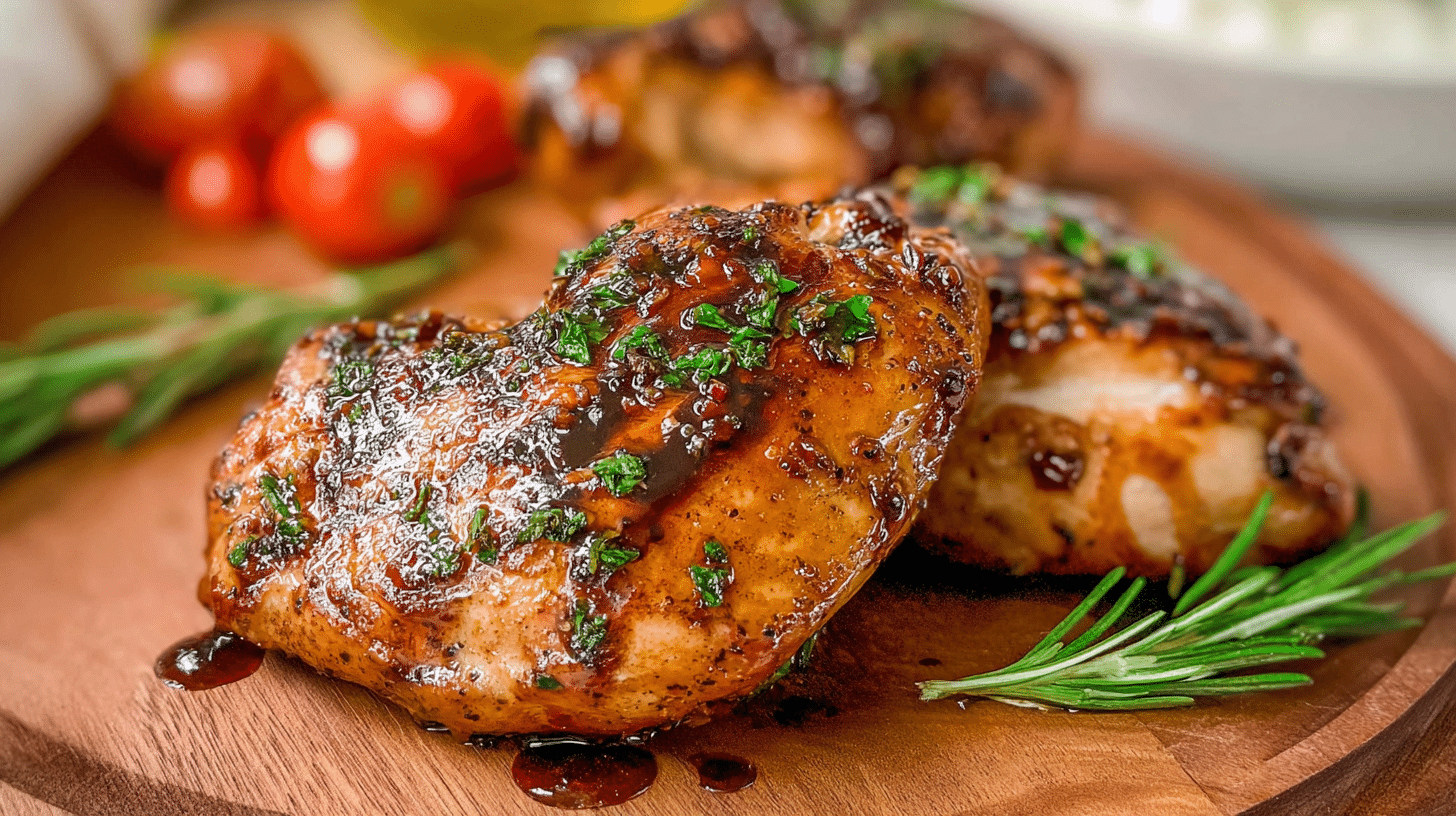
Juicy, caramelized, and irresistibly aromatic, Balsamic Chicken Recipe delivers a flavor experience that balances tangy balsamic glaze with savory herbs and a touch of natural sweetness. This dish stands out because it transforms simple chicken into something bold, glossy, and elegant enough for guests, yet easy enough for weeknights. What makes Balsamic Chicken Recipe so special is its depth of flavor and versatility — it tastes just as good over rice as it does on salad. You’ll learn how to sear chicken perfectly, reduce balsamic into a silky glaze, and serve it beautifully every time.
Why You’ll Love This Recipe
If you love meals that pack complex flavor without demanding complex technique, Balsamic Chicken Recipe is about to become a kitchen staple. The seared chicken breasts develop a golden crust that locks in moisture, while the glaze reduces into a glossy sauce that coats every bite. The contrast between the tender chicken and the syrupy balsamic reduction gives this dish a satisfying mix of textures you rarely get from fast skillet meals.
This dish also excels in convenience. Ingredients are pantry-friendly, cook time stays under 30 minutes, and cleanup is minimal since everything happens in one skillet. Whether you’re aiming for “skillet balsamic chicken” after work or looking to meal-prep juicy chicken for salads, bowls, or sandwiches, the format adapts with zero fuss. Because balsamic vinegar naturally pairs with fruits, vegetables, grains, and dairy, you can build endless variations without changing the core cooking process.
Finally, Balsamic Chicken Recipe has that restaurant-quality finish that makes people think you spent far more time cooking than you actually did. The aroma of garlic simmering in balsamic reduction smells incredible, the glossy sauce looks beautiful on the plate, and the taste feels elevated yet familiar. It’s elegant comfort food at its finest.
Ingredients
These measurements serve four and create the ideal glaze-to-chicken ratio for Balsamic Chicken Recipe:
4 boneless skinless chicken breasts (1.5 lbs / 680 g) – Lean protein that sears well.
2 tbsp (30 ml) olive oil – Helps brown the chicken and carry flavor.
1 tsp sea salt (6 g) – Enhances natural flavor.
½ tsp black pepper (2 g) – Adds warmth without overpowering.
½ tsp dried oregano (1 g) – For herbaceous depth.
½ tsp dried basil (1 g) – Complements sweet balsamic notes.
4 garlic cloves, minced (12 g) – Provides aromatic richness.
½ cup (120 ml) balsamic vinegar – The hero ingredient for the reduction.
2 tbsp (30 ml) honey – Adds balance and improves glaze texture.
¼ cup (60 ml) chicken broth – Loosens the glaze and lifts the flavor.
1 tbsp (15 ml) Dijon mustard – Adds tang and emulsifies the sauce.
1 tbsp (15 g) butter – Whisked at the end for silkiness.
Fresh parsley, chopped (optional) – For bright finishing color.
These simple, well-proportioned ingredients ensure that the balsamic glaze stays smooth, clingy, and balanced instead of sharp or watery.
Pro Tips
Tip 1: Sear Hot, Finish Low
Heat matters. Searing chicken in a ripping-hot skillet builds a golden crust and prevents steaming. Once browned, reduce heat to medium to finish cooking evenly. This technique keeps the meat juicy, and sauce clings better to crusted surfaces.
Tip 2: Reduce Balsamic Until Syrupy
The magic of Balsamic Chicken Recipe lies in reduction. Don’t rush it. Simmer the mixture until it thickens enough to coat the back of a spoon. Thin sauce tastes sharp and runny, while a syrupy glaze feels balanced, glossy, and luxurious.
Tip 3: Add Butter Off Heat
For restaurant-level texture, whisk a pat of butter into the finished glaze off heat. This smooths out acidity, rounds edges, and creates a velvety sauce without needing cream. It elevates the dish from “weeknight skillet” to “honey balsamic chicken thighs” dinner-party worthy.
Instructions
Step 1: Season the Chicken
Pat chicken breasts dry with paper towels. This helps browning. Season both sides generously with salt, black pepper, dried oregano, and dried basil. Press seasonings lightly so they adhere to the surface.
Step 2: Sear for Color and Flavor
Heat olive oil in a large skillet over medium-high heat. When the oil shimmers, place the chicken in the pan without crowding. Let it sear untouched for 4–5 minutes until deeply golden on the bottom. Flip and sear the other side for 3–4 minutes. Remove chicken and set aside on a plate; it will finish cooking in the glaze.
Step 3: Build the Glaze Base
Reduce heat to medium. Add minced garlic to the skillet and sauté for 30 seconds until fragrant. Pour in balsamic vinegar, honey, chicken broth, and Dijon mustard. Stir and scrape up brown bits from the bottom of the pan — those bits add savory complexity.
Step 4: Reduce to Perfection
Let the sauce simmer for 5–6 minutes, stirring occasionally, until it visibly thickens and begins coating the spoon. Proper reduction concentrates flavor and balances acidity. If it reduces too fast, lower the heat or add a splash of broth.
Step 5: Return Chicken and Coat
Add the chicken back into the skillet, nestling each piece into the glaze. Spoon sauce over the tops. Continue simmering 4–6 minutes until chicken reaches 165°F (74°C) internally. The glaze should look glossy and cling to the meat without pooling thinly at the bottom.
Step 6: Finish with Butter
Turn off the heat. Add one tablespoon of butter and swirl the pan until melted and emulsified. This final touch creates a velvety finish that elevates the flavor profile of Balsamic Chicken Recipe.
Step 7: Rest and Serve
Let the chicken rest for 3 minutes before slicing so juices redistribute. Then drizzle extra glaze on top and garnish with chopped parsley for color.
Variations
Balsamic Chicken Recipe works beautifully with different flavor profiles and proteins. Try one of these:
Mediterranean Variation:
Add cherry tomatoes, olives, baby spinach, and a sprinkle of feta at the end. The acidic balsamic pairs well with creamy feta and bright tomatoes, creating a more “skillet balsamic chicken” style bowl.
Honey Balsamic Chicken Thighs:
Swap breasts for skinless thighs and increase the reduction time by 2–3 minutes. Thighs stay ultra-juicy and pair beautifully with rice or roasted vegetables.
Creamy Balsamic Chicken:
Add ¼ cup (60 ml) heavy cream after reducing the glaze for a silkier finish. This creates a flavor similar to a gourmet café dish without complicating prep.
Storage/Serving
Store leftovers of Balsamic Chicken Recipe in an airtight container for up to 4 days in the refrigerator. To reheat, warm gently in a skillet over medium heat with a splash of broth to revive the glaze, or microwave in 30-second increments. You can also freeze cooked chicken (without butter-finished glaze) for up to 2 months, then reheat and finish with a fresh reduction for best taste.
Serving suggestions include:
Over jasmine rice or buttery mashed potatoes to soak up glaze.
On top of mixed greens for a warm balsamic chicken salad.
Beside roasted vegetables like carrots, Brussels sprouts, or asparagus.
Because this sauce pairs well with grains, vegetables, cheese, and fruit, it adapts to seasons and moods effortlessly.
FAQs
1. Can I use bone-in chicken for this recipe?
Yes, but increase cook time and finish in the oven at 375°F (190°C) until it reaches safe temperature. Bone-in thighs work especially well.
2. Can I reduce the sweetness?
Reduce honey to 1 tablespoon or skip it entirely. However, a touch of sweetness softens acidity and improves glaze texture.
3. Does balsamic vinegar go bad?
Good balsamic vinegar lasts a long time stored cool and sealed. It may thicken over time, but that rarely affects flavor negatively.
4. Can I make this recipe dairy-free?
Absolutely. Just omit the butter at the end and add a splash of olive oil for shine instead.
5. What other herbs pair well with this dish?
Rosemary, thyme, and Italian seasoning all complement balsamic vinegar beautifully without overpowering the glaze.
This Roasted Red Pepper, Spinach, and Mozzarella Stuffed Chicken is comfort food at its finest juicy seared chicken coated in a glossy balsamic glaze with layers of sweet, tangy, and savory notes. It’s the kind of dish that transforms everyday ingredients into a dinner worth lingering over, whether you’re cooking for yourself or hosting friends.