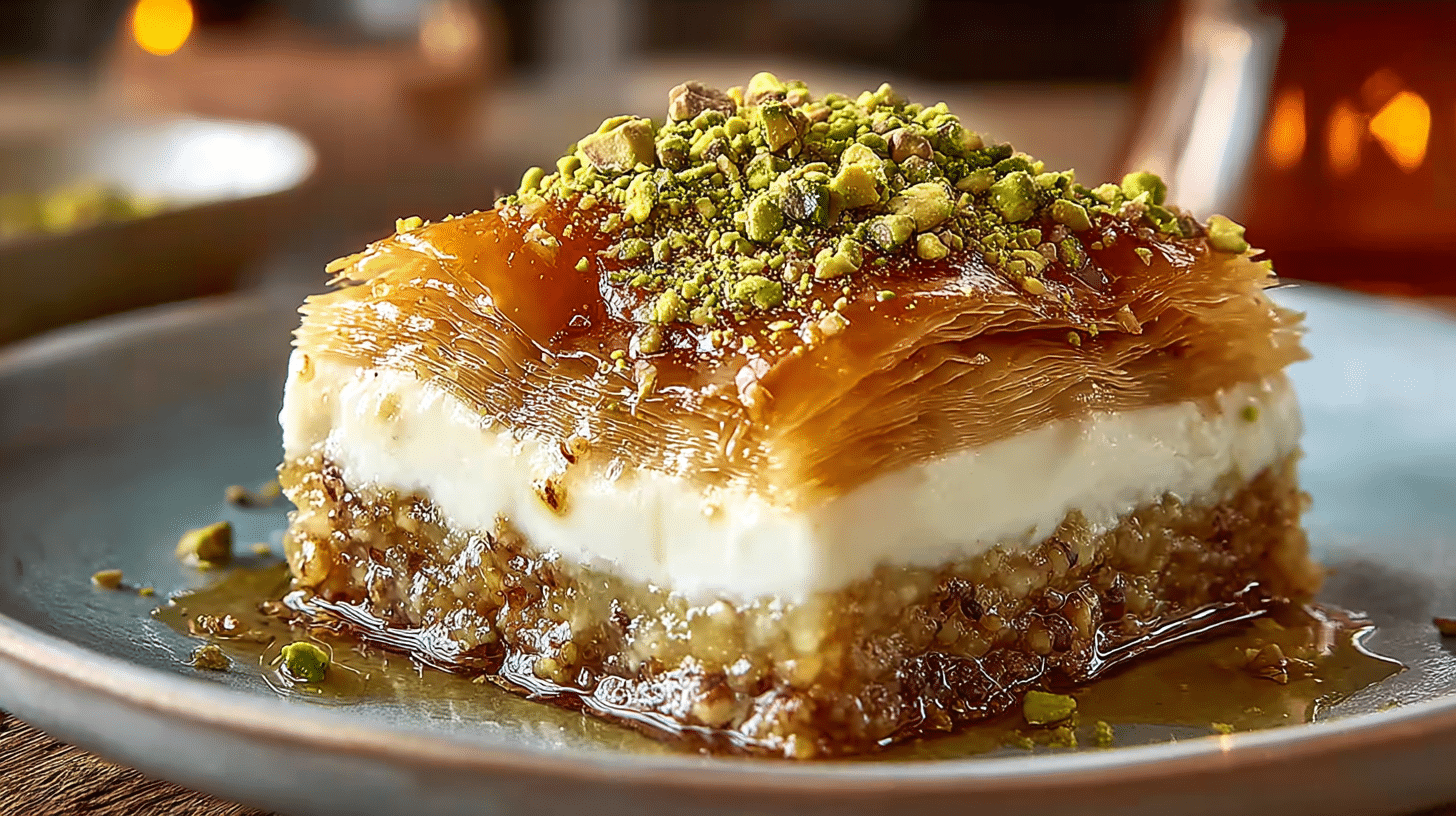
Flaky, buttery, and aromatic, the Honey Pistachio Baklava Cheesecake blends two iconic desserts into a surprisingly harmonious showstopper. Crisp filo shatters with every bite, revealing luxurious notes of honey, warm cinnamon, toasted pistachios, and silky cheesecake beneath. This Honey Pistachio Baklava Cheesecake is special because it keeps the essence of traditional Greek and Turkish baklava while adding the creamy richness of classic New York–style cheesecake. It satisfies both pastry lovers and cheesecake fans in one elegant slice. In this recipe, you’ll learn how to build flawless filo layers, create a stable cheesecake filling, and infuse honey syrup without sogginess—so your dessert tastes bakery-level every time.
Why You’ll Love This Recipe
The Honey Pistachio Baklava Cheesecake stands out for its textural complexity and balanced sweetness. Every forkful gives you crunch from baked filo, creaminess from the cheesecake, and caramelized flavor from spiced honey syrup. Unlike overly sweet baklava, this version stays balanced thanks to tangy cream cheese and a nut mixture that includes both pistachios and walnuts for depth. Each layer earns its place, and the final result feels indulgent while avoiding heaviness.
This fusion dessert also respects heritage. If you grew up eating Middle Eastern baklava, you’ll recognize the fragrance of cinnamon, cardamom, and cloves. Meanwhile, cheesecake lovers get that familiar custardy richness. The contrast in textures—crispy, creamy, sticky, nutty—makes every bite satisfying and dynamic. It’s the same appeal that makes custard-filled pastries or “kunafa cheesecake” hybrids so popular in modern bakeries.
Another reason to love this dessert is its efficiency. You build the filo base directly in a springform pan, eliminating the need for par-baking crusts or making graham cracker crumbs. You’ll create a honey syrup similar to what’s used in Lebanese baklava or Turkish künefe, but slightly thinner so it penetrates without turning soggy. Once assembled, this dessert travels well, slices cleanly, and even tastes better the next day as flavors meld. Presentation-wise, it’s impressive enough for holidays, weddings, and Ramadan gatherings.
Texture lovers, heritage bakers, and cheesecake fans will all find something to adore about this fusion dessert. From the floral sweetness of honey to the crunch of pistachios, the Honey Pistachio Baklava Cheesecake delivers celebration flavors in every bite.
Ingredients
Here’s what you need to make the Honey Pistachio Baklava Cheesecake, with exact measurements in both US and metric for accuracy:
For the nut mixture:
1 cup (120 g) pistachios, finely chopped
1 cup (120 g) walnuts, finely chopped
1 teaspoon ground cinnamon
1/4 teaspoon ground cardamom (optional)
2 tablespoons (30 g) granulated sugar
For the filo base:
12–14 sheets filo dough (about half a package), thawed
1/2 cup (113 g) unsalted butter, melted
For the cheesecake filling:
24 oz (680 g) cream cheese, softened
3/4 cup (150 g) granulated sugar
1/2 cup (120 g) sour cream, room temperature
3 large eggs
1 teaspoon vanilla extract
Zest of 1 lemon (optional, for brightness)
For the honey syrup:
1/2 cup (120 ml) honey
1/3 cup (80 ml) water
1/4 cup (50 g) sugar
1 teaspoon fresh lemon juice
1 cinnamon stick
This blend of nuts and spices creates classic baklava flavor. The filo brings structure and crunch, while the cheesecake adds creamy tang. The syrup ties everything together with fragrant sweetness.
Pro Tips
To get bakery-level results with your Honey Pistachio Baklava Cheesecake, apply these expert techniques:
1. Work fast with filo and keep it covered.
Filo dries within minutes, becoming brittle and difficult to handle. Keep unused sheets covered with a slightly damp (not wet) towel. Brush filo generously with melted butter, not just for flavor but to ensure crispness. Don’t worry about tearing—overlapping layers create the structure anyway.
2. Bake the cheesecake low and slow.
A cracked cheesecake comes from high heat or overbaking. Mix on low speed to avoid excess air, bake at 325°F (160°C), and stop when the center jiggles slightly. Residual heat finishes the job. This produces a smooth and creamy filling that pairs beautifully with crispy pastry.
3. Syrup must go on warm pastry, not cold.
Classic baklava rules apply. Pour warm syrup over hot pastry or cold syrup over hot pastry—never hot on hot or cold on cold—or your dessert turns soggy. For this recipe, drizzle syrup over the warm filo topping after baking, letting it absorb gradually while staying crisp.
These three tips prevent the most common issues—soggy pastry, cracked cheesecake, and dry texture—so your Honey Pistachio Baklava Cheesecake turns out exceptional every time.
Instructions
Follow these steps to build your Honey Pistachio Baklava Cheesecake with confidence and ease.
(Step 1) Prep the Pan
Preheat the oven to 325°F (160°C). Line a 9-inch (23 cm) springform pan with parchment on the bottom. Butter the sides or spray with baking spray to prevent sticking. Wrap the outside of the pan in foil if you plan to use a water bath later.
(Step 2) Make the Nut Layer
Mix pistachios, walnuts, sugar, cinnamon, and cardamom in a bowl. Taste and adjust spice levels based on preference. Some Middle Eastern bakeries also add a pinch of clove, so feel free to experiment.
(Step 3) Layer the Filo Base
Place one sheet of filo in the pan, letting excess hang over the edges. Brush lightly with melted butter. Repeat with 7–8 sheets, brushing each layer. Don’t rush; overlapping edges add strength. Scatter half of the nut mixture evenly over the layered filo.
(Step 4) Build the Middle Filo Layer
Add 3–4 more filo sheets on top of the nuts, brushing with butter between each sheet. This middle layer ensures the cheesecake sits on a sturdy base without leaking syrup into the filling later.
(Step 5) Prepare the Cheesecake Filling
Beat cream cheese and sugar on low speed until smooth. Mix in sour cream, vanilla, and lemon zest. Add eggs one at a time, mixing just until combined. Avoid whipping air into the batter—low speed ensures a dense and creamy texture.
(Step 6) Assemble the Cheesecake
Pour the cheesecake filling directly over the middle filo layer. Smooth the top with a spatula. Bake for 50–55 minutes or until the center jiggles slightly when shaken. Do not overbake.
(Step 7) Add the Baklava Topping
Remove the cheesecake from the oven. Carefully layer 4–5 filo sheets on top, brushing each with butter and tucking edges gently around the filling. Sprinkle remaining nut mixture across the top. Return to the oven for 18–22 minutes, or until the filo turns golden and crisp.
(Step 8) Make the Honey Syrup
While the cheesecake bakes, simmer honey, sugar, water, cinnamon stick, and lemon juice for 6–7 minutes until slightly thickened. Remove from heat and let cool until warm—not hot.
(Step 9) Drizzle With Syrup
When the filo topping comes out of the oven, remove the cinnamon stick and drizzle the warm syrup evenly across the hot pastry. The pastry should crackle lightly as it absorbs.
(Step 10) Chill Before Serving
Allow the cheesecake to cool to room temperature for at least 1 hour. Then refrigerate 6 hours or overnight. This step ensures clean slices and maximum flavor infusion.
Slice with a sharp knife, wiping the blade between cuts for picture-perfect presentation.
Variations
The Honey Pistachio Baklava Cheesecake is adaptable to many dietary needs and flavor preferences:
Rosewater Baklava Cheesecake
Add 1 teaspoon rosewater to the syrup for a floral aroma common in Persian baklava. Garnish with edible dried rose petals for visual appeal.
Knafeh-Inspired Cheesecake
Swap walnuts for more pistachios and use shredded kataifi dough instead of filo for the top. Finish with clotted cream for a flavor profile similar to Middle Eastern knafeh.
Gluten-Free Option
Use gluten-free filo (available from major specialty brands) and ensure nuts are processed in gluten-free facilities. No crust substitutes needed.
Each variation maintains the integrity of the original dessert while offering cultural or dietary twists that feel authentic, not gimmicky.
Storage/Serving
The Honey Pistachio Baklava Cheesecake stores beautifully, and some argue it tastes even better the next day as syrup settles and filo stays crisp.
Storage:
Refrigerate slices in an airtight container for up to 5 days.
Do not microwave to reheat—serve cold or room temp only.
Freezing works but filo texture softens slightly. Freeze up to 2 months, wrapped tightly, and thaw overnight in the fridge.
Serving Ideas:
Serve plain to showcase flavor.
Add a drizzle of honey for shine.
Top with chopped pistachios for crunch.
Serve with Turkish coffee, Arabic coffee, or strong espresso to balance sweetness.
For holidays like Easter, Eid, Christmas, and Thanksgiving, this dessert becomes an instant centerpiece and conversation starter.
FAQs
Can I make this without walnuts?
Yes. Replace walnuts with more pistachios or use almonds for a milder flavor.
Does filo get soggy from the cheesecake?
No, the internal filo layers stay firm because they’re sandwiched and protected from moisture. Syrup technique also prevents sogginess.
Should I bake this in a water bath?
You can, but it isn’t required. A water bath gives a more custardy cheesecake, while dry baking gives a denser one. Both work.
Can I use store-bought syrup?
Honey-based syrups from Middle Eastern grocery stores work, but homemade syrups taste fresher and allow spice control.
How do I slice it cleanly?
Use a hot knife. Dip in hot water, wipe dry, slice, and repeat.
This Honey Pistachio Baklava Cheesecake is comfort food at its finest crispy, creamy, nutty, and beautifully fragrant with honey and warm spices. It’s the kind of dish that impresses guests at holidays, celebrations, and festive gatherings while honoring traditional baklava flavors in an elevated cheesecake form.