
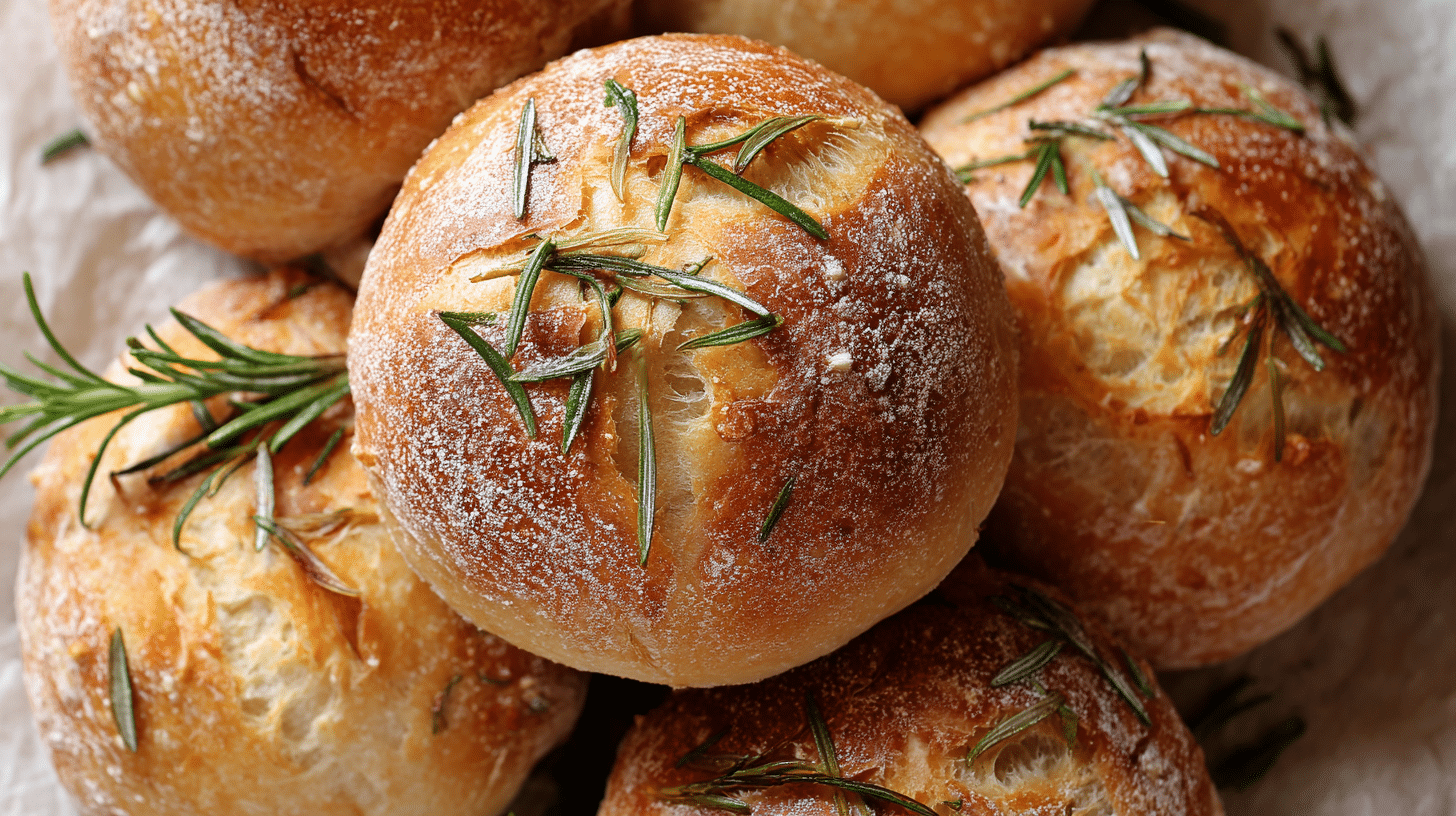
Crispy, golden crust. Airy, chewy interior. Fragrant rosemary and briny olives baked into every bite. Olive & Rosemary Ciabatta Rolls bring rustic Italian bakery flavor straight into your kitchen. These artisan-style rolls combine bold Mediterranean ingredients with a light, open crumb that makes them perfect for sandwiches, dipping, or serving alongside soups and salads. The contrast between crackly crust and soft interior makes them irresistible. If you love homemade ciabatta bread or rosemary olive bread, this recipe delivers bakery-quality results with simple techniques. You’ll learn how to master hydration, structure, and flavor for perfect rolls every time.
Why You’ll Love This Recipe
You’ll love Olive & Rosemary Ciabatta Rolls because they deliver artisan texture without intimidating techniques. Ciabatta dough uses higher hydration, which creates those signature airy pockets. When baked, the crust turns deeply golden and slightly crisp while the inside stays tender and chewy.
The olives add bursts of salty richness, while fresh rosemary infuses the dough with earthy aroma. That flavor combination pairs beautifully with grilled meats, hearty soups, or even something simple like garlic pasta with bacon. Each roll offers contrast: crisp exterior, soft interior, savory herbs, and briny olives.
Despite their bakery look, these rolls require no complicated shaping. You simply stretch, fold, and cut. The dough does most of the work. If you enjoy rustic Italian rolls or artisan sandwich buns, this recipe gives you professional results at home.
Ingredients
To make 8 medium rolls:
3 1/2 cups bread flour (440g) – Provides structure and chew
1 1/2 tsp salt (9g) – Enhances flavor
2 tsp instant yeast (6g) – Helps dough rise efficiently
1 1/2 cups warm water (360ml, 105–110°F / 40–43°C) – Creates high hydration
2 tbsp olive oil (30ml) – Adds richness
3/4 cup pitted Kalamata olives, chopped (120g) – Briny flavor bursts
1 tbsp fresh rosemary, finely chopped (5g) – Aromatic herb
Bread flour works best for Olive & Rosemary Ciabatta Rolls because its higher protein content supports the airy crumb structure.
Pro Tips
To perfect Olive & Rosemary Ciabatta Rolls, focus on three essential techniques.
First, embrace the sticky dough. High hydration creates air pockets, so avoid adding excess flour. Lightly oil your hands instead of dusting heavily.
Second, use stretch-and-fold technique. Instead of kneading traditionally, fold the dough every 30 minutes during the first rise. This strengthens gluten without deflating air bubbles.
Third, handle the dough gently when shaping. Pressing too hard removes air pockets that define ciabatta. Cut and transfer carefully to preserve the open crumb.
Mastering these techniques ensures your homemade ciabatta rolls bake with bakery-style texture and structure.
Instructions
Step 1: Mix the Dough
In a large bowl, combine bread flour, salt, and yeast. Add warm water and olive oil. Stir with a wooden spoon until a shaggy dough forms. Fold in chopped olives and rosemary evenly.
Step 2: First Rest
Cover the bowl with plastic wrap or a damp towel. Let the dough rest for 30 minutes. This autolyse phase hydrates the flour and improves texture.
Step 3: Stretch and Fold
After resting, wet your hands. Grab one side of the dough, stretch upward, and fold over. Rotate the bowl and repeat four times. Cover and rest for 30 minutes. Repeat this process three more times over 1.5 hours.
Step 4: Bulk Fermentation
Let the dough rise until doubled, about 1–2 hours depending on room temperature. It should look airy and bubbly.
Step 5: Shape the Rolls
Dust your counter lightly with flour. Gently turn out the dough. Avoid pressing it flat. Shape into a rectangle and cut into 8 pieces using a bench scraper.
Step 6: Final Proof
Transfer rolls to a parchment-lined baking sheet. Cover loosely and let rise 30–45 minutes.
Step 7: Bake to Crispy Perfection
Preheat oven to 425°F (220°C). Place a small pan of water on the bottom rack to create steam. Bake rolls for 20–25 minutes until golden brown and crisp.
Step 8: Cool and Serve
Cool slightly before slicing. The crust will crackle as it settles, signaling perfect texture in your Olive & Rosemary Ciabatta Rolls.
Variations
You can customize Olive & Rosemary Ciabatta Rolls to match your taste.
For a sun-dried tomato version, replace olives with 3/4 cup chopped sun-dried tomatoes. The sweetness balances rosemary beautifully.
For a cheesy variation, fold in 1/2 cup grated Parmesan. This adds savory depth similar to Italian herb sandwich bread.
For a whole wheat option, substitute 1 cup of bread flour with whole wheat flour. Add 1–2 tablespoons extra water to maintain hydration.
You can also experiment with roasted garlic for a garlic rosemary ciabatta twist that pairs well with soups or pasta dishes.
Storage/Serving
Store Olive & Rosemary Ciabatta Rolls at room temperature in a paper bag for up to 2 days. Avoid sealing tightly in plastic, as that softens the crust.
For longer storage, freeze rolls in an airtight bag for up to 2 months. Reheat directly in a 350°F oven for 8–10 minutes to restore crispness.
Serve these rolls alongside tomato basil soup, Mediterranean salads, or slice them for gourmet sandwiches. They also make excellent dipping bread for olive oil and balsamic vinegar. The crisp crust and chewy interior elevate even simple meals.
FAQs
Why is my ciabatta dough so sticky?
High hydration creates the airy crumb. Sticky dough is normal.Can I use all-purpose flour instead of bread flour?
Yes, but the crumb may be slightly less chewy.How do I create steam in the oven?
Place a small metal pan with hot water on the lower rack during baking.Can I make the dough overnight?
Yes. Refrigerate after the first fold and allow it to come to room temperature before shaping.Why didn’t my rolls puff up?
Under-proofing or over-handling may have reduced air pockets.
This Olive & Rosemary Ciabatta Rolls is comfort food at its finest — rustic, crispy on the outside, airy on the inside, and infused with savory olives and fragrant rosemary. It’s the kind of dish that transforms simple dinners into Mediterranean-inspired feasts and makes homemade bread feel both impressive and approachable.