
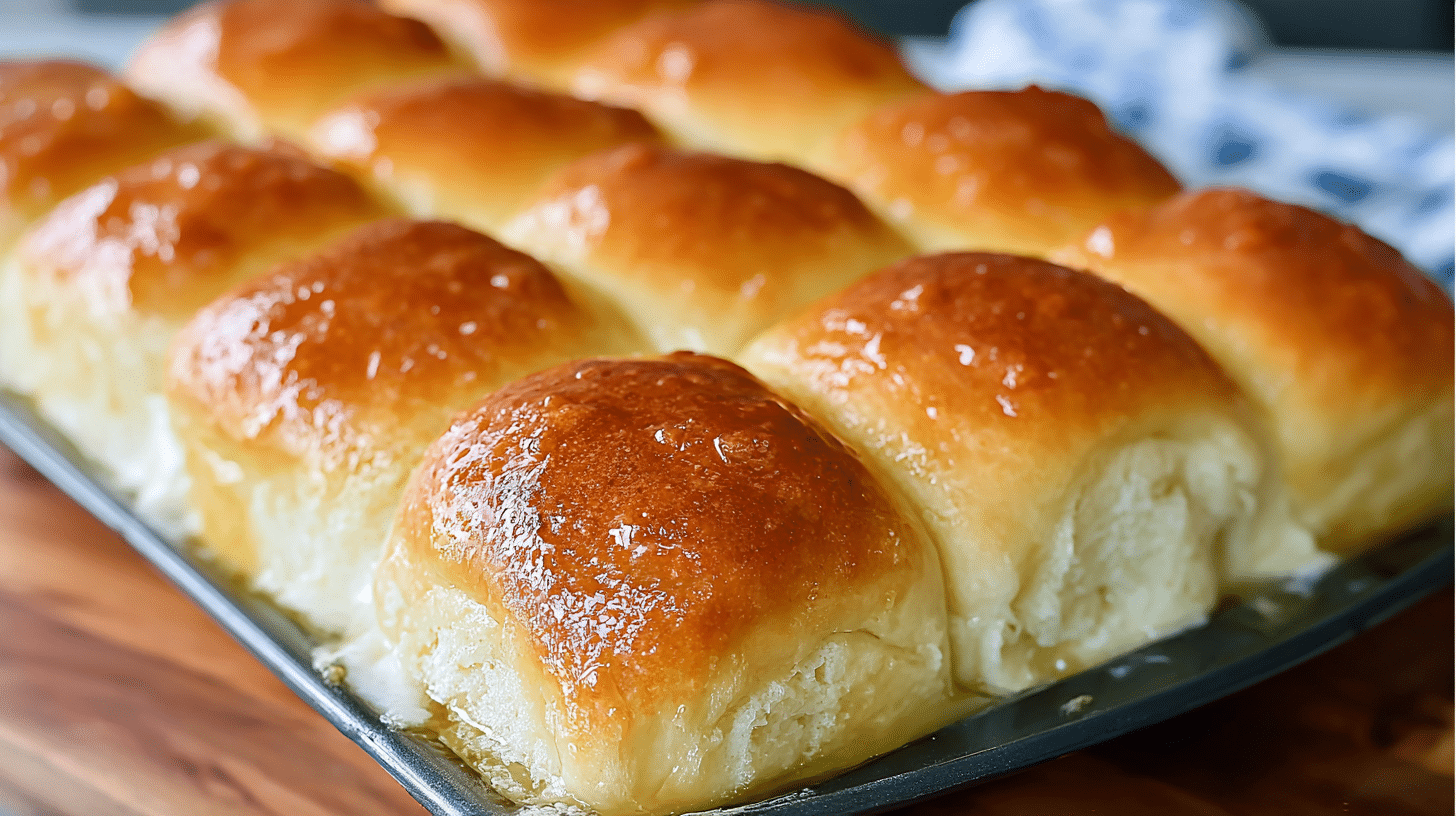
Buttery, pillowy, and lightly golden on top, Parker House Rolls bring irresistible warmth to any table. When you pull one apart, steam escapes from the soft center, revealing tender layers brushed with melted butter. These classic dinner rolls earned their reputation for their delicate sweetness and signature folded shape. Whether you serve them for holidays or weeknight meals, they always impress. In this guide, you’ll learn how to master homemade Parker House Rolls with bakery-quality texture and flavor.
Why You’ll Love This Recipe
There’s something magical about fresh Parker House Rolls straight from the oven. The tops develop a delicate golden crust, while the interior stays incredibly soft and fluffy. That contrast between lightly crisp edges and airy centers creates pure comfort in every bite.
Unlike basic dinner rolls, these feature a signature fold that traps melted butter inside. Each layer pulls apart beautifully, making them perfect for soaking up gravy, soups, or sauces. They pair just as well with roast turkey as they do with hearty dishes like garlic pasta with bacon or creamy ranch chicken soup.
This recipe remains approachable for home bakers. Simple pantry ingredients combine into a forgiving dough that rises reliably. With clear shaping steps and helpful tips, you can confidently bake soft buttery dinner rolls that rival your favorite bakery.
Ingredients
To make authentic Parker House Rolls, gather these ingredients:
4 cups (500 g) all-purpose flour
2 1/4 tsp (7 g) active dry yeast
1 cup (240 ml) whole milk, warmed to 110°F (43°C)
1/4 cup (50 g) granulated sugar
1 large egg, room temperature
1 tsp (6 g) salt
6 tbsp (85 g) unsalted butter, melted
2 tbsp (30 g) extra melted butter for brushing
Warm milk activates the yeast and supports a soft crumb. Butter adds richness and signature flavor. Sugar lightly sweetens the dough and helps create that golden finish. Use room-temperature egg for better incorporation.
Pro Tips
First, monitor yeast temperature carefully. Milk that feels warm but not hot ensures proper activation. If it exceeds 115°F, the yeast can lose strength, resulting in dense rolls.
Second, knead until smooth and elastic. The dough should feel soft but not sticky. Proper kneading builds gluten, which gives Parker House Rolls their airy structure. If you press the dough gently and it springs back, it’s ready.
Third, brush generously with butter before and after baking. This step creates layered richness and enhances that signature glossy finish.
Let the dough rise fully until doubled in size. Rushing this stage can compromise texture. Patience rewards you with beautifully fluffy rolls.
Instructions
Step 1: Activate the Yeast
Combine warm milk and sugar in a bowl. Sprinkle yeast over the top and let it sit for 5–7 minutes until foamy. This confirms the yeast is active.
Step 2: Mix the Dough
Add egg, salt, and melted butter to the yeast mixture. Gradually stir in flour, one cup at a time, until a soft dough forms.
Step 3: Knead the Dough
Transfer dough to a floured surface. Knead for 8–10 minutes until smooth and elastic. Add small amounts of flour if the dough feels too sticky.
Step 4: First Rise
Place dough in a greased bowl and cover with a clean towel. Let it rise in a warm spot for about 1 hour, or until doubled in size.
Step 5: Shape the Rolls
Punch down the dough gently. Roll it out to about 1/2-inch thickness. Cut into 3-inch circles. Brush each circle lightly with melted butter, then fold in half to create the classic shape.
Step 6: Second Rise
Arrange folded rolls on a greased baking pan. Cover and let them rise again for 30–40 minutes until puffy.
Step 7: Bake to Perfection
Preheat oven to 350°F (175°C). Bake for 18–20 minutes until tops turn golden brown.
Step 8: Finish with Butter
Brush warm rolls with remaining melted butter. Serve your freshly baked Parker House Rolls warm.
Variations
For honey butter rolls, replace sugar with honey and brush tops with honey butter after baking. This variation enhances sweetness and aroma.
You can create whole wheat Parker House rolls by substituting half the flour with whole wheat flour. This option adds nutty flavor while maintaining softness.
For savory garlic rolls, mix minced garlic into melted butter before brushing. These pair beautifully with pasta dishes or roasted meats.
Storage/Serving
Store leftover Parker House Rolls in an airtight container at room temperature for up to 2 days. Reheat briefly in the oven at 300°F to refresh softness.
For longer storage, freeze cooled rolls in a sealed freezer bag for up to 3 months. Thaw at room temperature and warm before serving.
Serve alongside roast chicken, holiday turkey, soups, or hearty stews. They also complement lighter dishes like Mediterranean green salad bowl, creating a balanced meal spread.
FAQs
Can I make the dough ahead of time?
Yes. Refrigerate after the first rise and shape the next day.Why are my rolls dense?
Under-kneading or inactive yeast often causes dense texture.Can I use instant yeast?
Yes. Mix instant yeast directly with flour and skip proofing.How do I keep rolls soft?
Store them tightly sealed and brush generously with butter.Can I double the recipe?
Absolutely. Simply double all ingredients and bake in batches.
This [Roasted Red Pepper, Spinach, and Mozzarella Stuffed Chicken] is comfort food at its finest — but these Parker House Rolls deliver that same heartwarming satisfaction in soft, buttery layers. It’s the kind of dish that completes holiday feasts, elevates everyday dinners, and fills your kitchen with irresistible homemade aroma.